Serving Stillwater, OK and surrounding areas. (405) 338-4557
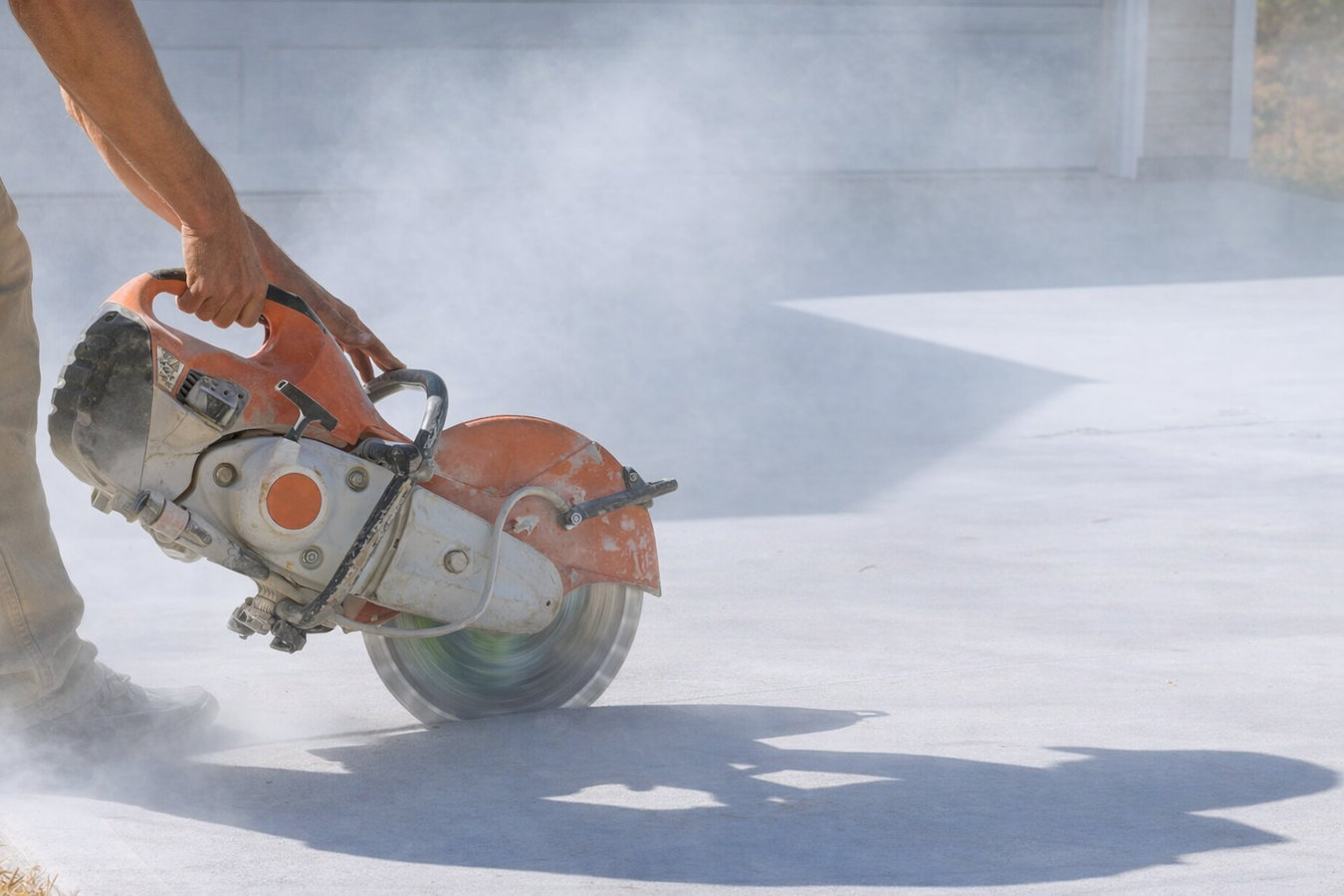
Whether you need a utility trench, expansion joints, or a damaged section removed, we make the cut straight, contain the dust, and haul away the debris before we leave.
Concrete cutting in Stillwater uses diamond-tipped saw blades to slice through existing slabs cleanly and precisely - creating openings for drains, pipes, or doorways, removing damaged sections, or cutting expansion joints that prevent future cracking, with most residential jobs completed in a few hours from setup to cleanup.
In Stillwater, concrete cutting is often the first step in a larger repair or renovation rather than a standalone job. If a section of your driveway has shifted, if a plumber needs access under a garage floor, or if your slab is cracking because it lacks proper expansion joints - the right starting point is a clean, controlled cut. Using a jackhammer instead of a diamond saw can crack the surrounding concrete and create new problems that cost more to fix than the original issue. In a city where clay-soil movement already stresses slabs year-round, doing this step correctly matters.
Concrete cutting is frequently paired with other services. When a damaged driveway section needs to be replaced after cutting, our concrete driveway building service handles the pour and finish once the old slab is removed.
If a crack in your driveway or patio that was a hairline last year is now wide enough to fit a finger in, that is not just cosmetic. Stillwater's clay soils and seasonal temperature swings accelerate this kind of damage, and once a crack reaches a certain width, patching it without cutting out the damaged section first will not hold. Cutting removes the compromised area so a proper repair can be made.
If part of your driveway or sidewalk sits noticeably higher or lower than the next section, the ground underneath has moved. This is very common in Stillwater's clay-soil neighborhoods, especially where moisture variation is high. Cutting out the affected section is usually the first step toward leveling or replacing it cleanly.
Any time a plumber, electrician, or HVAC contractor needs to run a line under your slab - whether in a garage, basement, or utility room - the concrete has to be cut first. If you are planning a renovation that involves new utility connections, concrete cutting is part of the process, not an optional add-on.
Expansion joints are the thin lines cut into concrete slabs that give the material room to expand and contract with temperature changes. If your driveway or patio has no visible joints, or the existing ones have filled in with debris and sealed shut, the slab has nowhere to go when it heats up - and it will crack. Stillwater summers regularly push past 100 degrees, making this especially relevant here.
We handle flat slab cutting for driveways, garage floors, patios, sidewalks, and interior utility runs throughout Stillwater and the surrounding area. Every job starts with a utility locate through Oklahoma's Okie811 service - required by state law and a basic protection for your home - before any blade touches your concrete. We use wet-cutting methods on every job to keep silica dust controlled at the source, and cleanup of the slurry and cut debris is included in our standard scope. Homeowners renovating a floor after cutting often follow up with our concrete floor installation service to get the replacement surface poured, finished, and ready to use.
For jobs where the cut section will be replaced with new driveway concrete, we coordinate the cutting and the pour so you work with one crew rather than two. Written estimates detail the cut dimensions, depth, cleanup scope, and whether debris hauling is included - so there are no surprises when the invoice arrives. Homeowners doing broader driveway work can pair cutting with our concrete driveway building service to handle removal and replacement in a single coordinated project.
Suits homeowners and contractors who need a horizontal cut through a driveway, garage floor, patio, or sidewalk to remove a damaged section or create a utility opening.
Suits homeowners with existing slabs that lack proper relief joints, where adding cuts now prevents cracking during Stillwater's high-heat summers or winter freeze-thaw cycles.
Suits plumbers, electricians, and HVAC contractors - or homeowners coordinating those trades - who need a precise trench cut through a slab before running new lines underneath.
Suits homeowners removing one damaged or uneven section of a larger slab without disturbing the surrounding concrete, so only the problem area gets replaced rather than the whole pour.
Stillwater's clay-heavy soils never really stop moving. Every wet spring followed by a dry, 100-degree summer puts slabs under stress from below, and concrete that lacks proper expansion joints has nowhere to go except to crack. A significant share of Stillwater's housing stock was built in the 1960s through 1980s, meaning many driveways, garage floors, and sidewalks in town are now 40 to 60 years old - past the service life where patching alone is enough. Cutting out damaged sections cleanly and replacing them properly is a more durable solution than surface patching that fails after a season or two. Winter freeze-thaw cycles add to the problem by widening small cracks every time temperatures swing above and below freezing in January and February.
We work across Stillwater and into surrounding communities, including Cushing and Perkins, where the same north-central Oklahoma soil conditions drive the same concrete problems. Knowing this region means knowing which slabs are likely to be thicker than expected, where utility infrastructure tends to run in older neighborhoods, and what soil conditions will look like under the cut - so there are no surprises when the saw is running.
When you call or submit a request, we ask a few basic questions - what you are trying to accomplish, roughly where the concrete is, and whether you know how thick the slab is. Most jobs get a quick on-site visit before a firm price is given, because thickness, accessibility, and the number of cuts all affect the cost. You will receive a written estimate before we schedule anything. We respond within one business day.
Before the crew touches your concrete, we contact Oklahoma's Okie811 utility-locating service to have any underground lines marked - as required by state law. You may see small flags or paint marks on your property in the days before the job. Those markers confirm the right steps are being followed to protect your home.
On the day of the job, the crew sets up equipment and marks the cut lines. The saw runs along those lines with water flowing continuously to cool the blade and control dust. Individual cuts typically take minutes, not hours, though a multi-cut job takes longer. You will see a gray slurry on the surface during the work - that is normal and will be cleaned up.
Once the cuts are complete, the crew removes the cut-out sections and cleans the slurry and dust from the work area. Before leaving, we walk you through the finished cuts and tell you what the area needs before the next phase of work - whether that is a utility install, a new pour, or something else entirely.
Written estimate, utility locate included, full cleanup on every job. Response within one business day.
(405) 338-4557We use diamond-tipped saw blades - not abrasive wheels or jackhammers - for every cut. Diamond blades grind through concrete rather than chipping it, which means less vibration spreading into the surrounding slab and cleaner edges that hold up better over time. In Stillwater, where existing slabs are already under stress from clay-soil movement, protecting the surrounding concrete during the cut matters.
Oklahoma law requires a utility locate before any cutting or digging that could reach buried lines - and we follow that process on every single job. Older Stillwater neighborhoods in particular can have utility infrastructure that is not mapped precisely. Skipping the locate to save time is not a risk we take with your home. The Okie811 service is free and takes a few days - we build that lead time into every job schedule.
Cutting concrete releases fine silica dust that is a real health hazard if it becomes airborne. We use wet-cutting methods to suppress dust at the source on every job, in line with guidance from OSHA's silica safety standards. That slurry is cleaned up before we leave - it does not wash into your yard or storm drain.
Concrete cutting tied to a plumbing, drainage, or utility project can trigger a permit requirement through the City of Stillwater Development Services office. We review the full project scope with you before scheduling and flag any permit requirements upfront - so the job does not stall mid-project because paperwork was missed.
These practices are not extras - they are what separates a professional concrete cutting job from one that creates new problems while fixing the old ones. In Stillwater, where the ground is always working against your concrete, doing the cut right the first time is the only approach worth taking.
New driveway pours to replace sections removed during cutting, or full replacement when an existing driveway is past repair.
Learn MoreInterior floor pours after utility cuts in garages, basements, or utility rooms where the slab needs to be restored.
Learn MoreSlabs without proper expansion joints crack when temperatures push past 100 degrees - schedule your cut now while conditions are still in your favor.