Serving Stillwater, OK and surrounding areas. (405) 338-4557
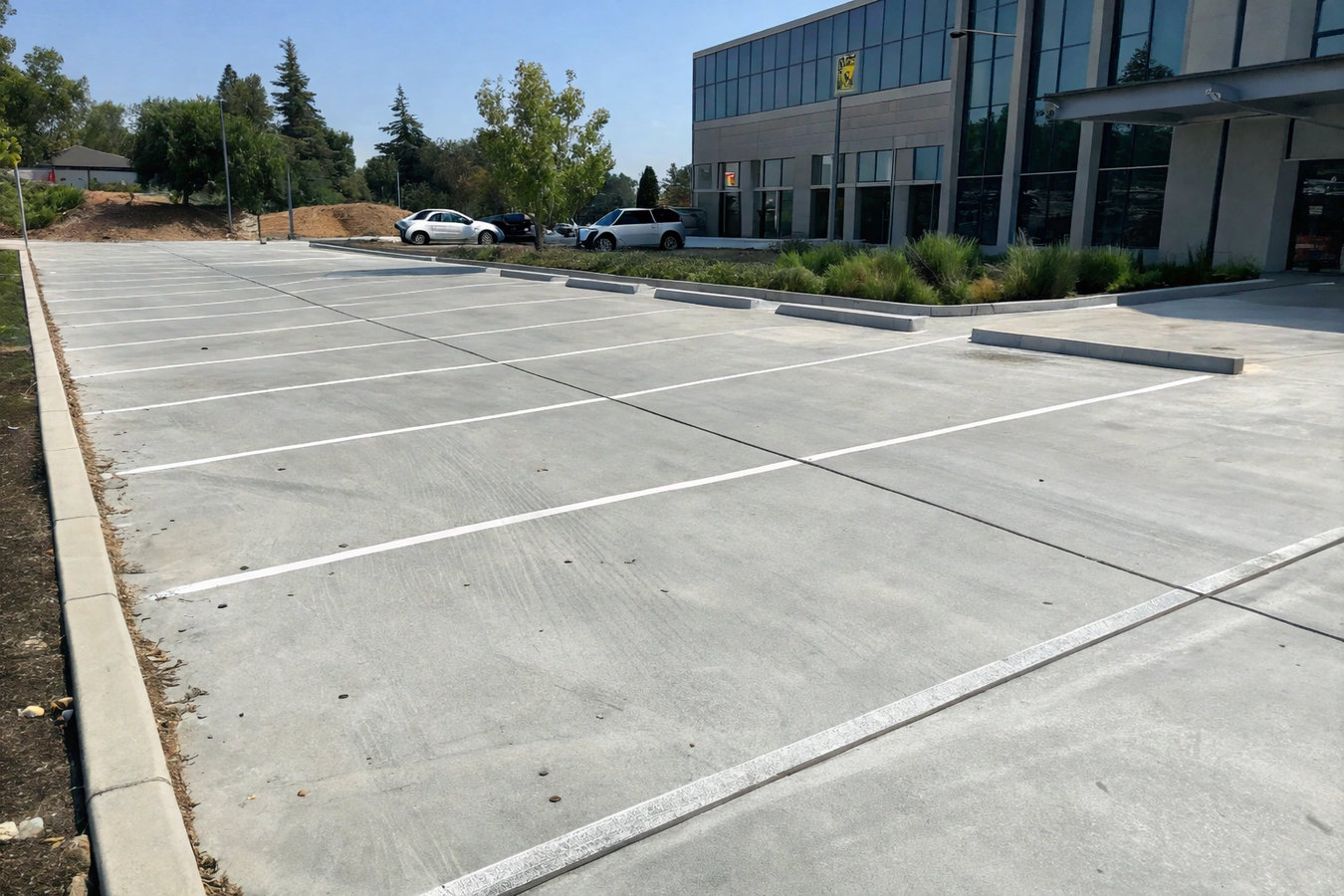
Gravel lots wash out every spring and asphalt softens in Oklahoma heat. A properly built concrete parking lot handles both - and lasts for decades without constant upkeep.
Concrete parking lot building in Stillwater starts with removing the existing surface, excavating and compacting a gravel base, then pouring a reinforced concrete slab with proper drainage slope and control joints - most residential or small commercial lots take two to five days of active work, plus seven or more days of curing before vehicles can use the surface.
If you are dealing with a gravel lot that washes out every spring, an asphalt surface that has softened and rutted in Oklahoma summers, or a bare dirt area that tracks mud into your building, a concrete parking lot solves all of those problems at once. The work starts below the surface - proper excavation and base compaction are what determine whether your lot holds up for thirty years or starts cracking in five. Stillwater's clay soil makes this preparation even more important, because the ground here expands and contracts with every wet and dry season.
For projects that also involve paving adjacent to the property, the foundation beneath the lot needs to carry the load correctly. If you are also building a new structure on the same site, pairing a parking lot pour with proper concrete footings ensures both surfaces are built on a stable, integrated base from the start.
Small hairline cracks are normal in older concrete, but if you can fit a quarter into a crack, or the edges are at different heights, the base underneath has shifted. In Stillwater's clay-heavy soil, this kind of movement tends to get worse every season - patching alone will not address the underlying problem.
Puddles sitting on a parking surface for hours after a storm mean the surface has settled unevenly or was never graded to drain. In Stillwater's wet spring season, standing water weakens the base layer over time and creates a slip hazard - and the problem repeats itself every few weeks until the surface is corrected.
When the top layer of concrete flakes off or the edges start breaking apart, the surface has reached the end of its useful life. Deterioration tends to accelerate once it starts - what looks cosmetic today becomes a tripping hazard or vehicle-damage problem within a season or two.
Gravel lots in Stillwater wash out in heavy spring rains, develop ruts from regular traffic, and spread onto surrounding grass and pavement. If you are raking or adding gravel every year, the long-term cost of concrete often works out to less than the ongoing cost of maintaining loose material.
We build concrete parking lots for homeowners, landlords, and small commercial property owners throughout Stillwater and the surrounding area. Every project starts with a site visit to check drainage, assess soil conditions, and determine the right slab thickness before a single number is quoted. We handle the full job - excavation, gravel base compaction, reinforcement, pouring, and joint placement - so the finished surface drains properly, handles the expected vehicle load, and does not start cracking within the first year. For larger paved surfaces or commercial work, we also handle concrete driveway building when adjacent driveway access needs to be poured at the same time.
We pull the required City of Stillwater permits before any work begins and can coordinate inspections as required by the city. Written estimates cover the full scope - excavation, base preparation, concrete thickness, drainage work, and permit fees - so there are no items showing up on the invoice that were not in the original quote. We also incorporate concrete footings when a project involves a new structure adjacent to the parking area that needs a structurally independent base.
Suits homeowners replacing a gravel or dirt parking area with a permanent concrete surface for personal vehicles, trailers, or recreational equipment.
Suits small business and rental property owners who need a paved lot that handles regular vehicle traffic, meets city drainage requirements, and is permitted and inspected.
Suits property owners with a failing asphalt or deteriorated concrete lot who want a complete rebuild rather than a patch job that will need attention again in a few years.
Suits developers and homeowners building new structures who want the parking area poured as part of the same project, coordinated with the building permit and site plan.
Stillwater sits on expansive red clay soils that swell with every spring rain and shrink back during the long dry summers. That constant soil movement is the main reason concrete fails prematurely on parking surfaces in this area. A lot poured directly on poorly compacted ground will develop cracks and uneven sections within a few seasons. The fix is a properly excavated, compacted gravel base that gives the slab a stable platform regardless of what the soil underneath is doing. In Stillwater, skipping or shortcutting this step is the single most common mistake in parking lot construction. Homeowners in Cushing and nearby communities face the same soil conditions, so the same preparation standards apply across the region.
Stillwater's weather adds two more challenges specific to this area. Summer temperatures that regularly exceed 95 degrees can cause fresh concrete to cure too quickly on the surface, creating a brittle top layer that looks fine at first but cracks within a year or two. Winter freeze-thaw cycles - while milder than northern states - still stress concrete that was not properly cured before the first hard freeze. Timing concrete pours for spring or fall and using hot-weather practices in summer gives Stillwater parking lots the best chance of hitting their full lifespan. Property owners in Perry and other communities north of Stillwater experience similar seasonal patterns, and the same pour-timing considerations apply there.
We visit your property in person before quoting anything. We check drainage, soil conditions, and how the lot will be used to recommend the right thickness and layout - you will hear back within one business day of reaching out.
You receive a written estimate covering the full scope before we schedule anything - no surprises on the invoice. Once you approve it, we apply for the required City of Stillwater permits before any work begins.
The crew removes the existing surface, excavates to the correct depth, and compacts a gravel base layer. This prep work typically takes a full day - it is the most important part of the job, and we do not rush it.
Forms are set, reinforcement is placed, and concrete is poured and finished. After a minimum seven-day curing period for light vehicles, we walk the finished lot with you to confirm drainage, edges, and surface finish before we leave.
We visit the site in person before quoting - no estimates based on square footage guesses. Reach out and we will respond within one business day.
(405) 338-4557We account for Payne County's expansive clay soils on every parking lot project - not as an add-on, but as standard practice. That means the right excavation depth and a properly compacted gravel base before any concrete goes down, which is what separates a lot that holds together from one that starts cracking within a few seasons.
Every project gets a written estimate that covers excavation, base prep, concrete, drainage, and permit fees - all in one document before we schedule anything. You will not see additional charges on the final invoice that were not in the original quote.
We pull the required permits with the City of Stillwater and coordinate inspections as the project requires. Permitted work is on record, which protects you if you ever sell the property or file an insurance claim related to the paved area.
Every parking lot we build is graded with the correct slope so water drains away from buildings and toward the street or a designated drainage area. Flat lots that pond water damage their own base over time - proper drainage is part of every estimate, not an upgrade you have to ask for.
Stillwater property owners get a parking lot that was built for local soil, local weather, and local permit requirements - not a generic pour that passes inspection on paper but needs attention within a few years.
Structural concrete footings for new builds, deck additions, and any structure needing a stable buried base in Stillwater's clay soil.
Learn MoreNew concrete driveways built with proper base preparation and reinforcement so the surface connects cleanly with your parking area.
Learn MoreSpring and fall slots fill fast with Stillwater's construction demand - reach out now to get on the schedule before the busy season begins.