Serving Stillwater, OK and surrounding areas. (405) 338-4557
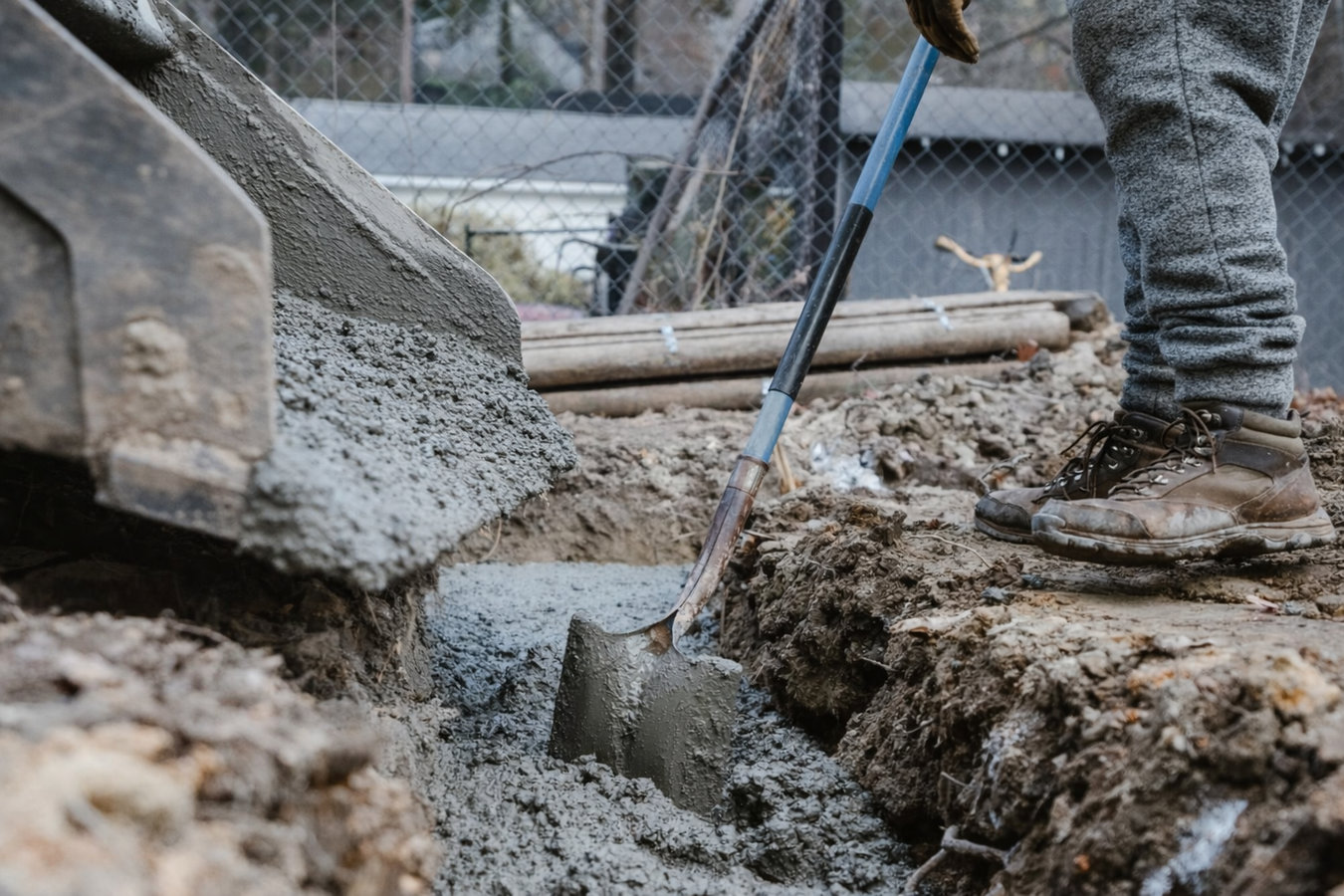
A deck that tilts or an addition that cracks usually traces back to the footing underneath. We dig to the right depth, reinforce with steel, and pull the city permits so your structure stays level.
Concrete footings in Stillwater are the buried bases that hold up decks, porches, room additions, and outbuildings - the crew digs to the required depth, sets steel rebar inside forms, and pours concrete that cures over several days before any framing begins. Most residential footing projects take one to three days of active work, plus permit review and curing time before the next phase can start.
Think of footings as the roots of a tree - you never see them once the structure is built, but they are what keep everything above them from moving. In Stillwater, the clay-heavy soil expands in wet weather and shrinks back during dry summers, putting constant stress on anything buried in the ground. A footing that was not sized and reinforced for those conditions will shift over time, and the structure above it shifts with it. Doors start sticking, walls crack at the corners, and decks develop a noticeable tilt.
Footing work is almost always the first step before any above-grade structure goes up. If your project also involves a concrete slab, pairing your footings with foundation installation ensures both the slab and the load-bearing perimeter are built as a complete, integrated system.
If one corner of your deck sits lower than the others, or a gap has opened up between your porch and the exterior wall, the footing underneath may have shifted. In Stillwater, clay soil expanding and contracting with seasonal rains and drought is the most common cause. The movement tends to get worse each season, not better.
Diagonal cracks running from the corners of windows or doors are a classic sign that something below the structure is moving. Stillwater's clay soils are particularly prone to this after a dry summer followed by heavy spring rains. New cracks that were not there a year ago are worth getting checked.
When the ground shifts under a structure, door and window frames move with it. A door that used to close easily but now sticks at the top or drags on the floor is a sign the structure may be settling unevenly. This is especially common in older Stillwater homes built before current footing depth standards.
Any new structure that attaches to your home or stands on its own foundation needs proper footings before anything else is built. Skipping this step - or using an undersized footing - is the most common reason new additions develop problems within the first few years. Footing work is the first conversation to have.
We install concrete footings for decks, room additions, covered porches, detached garages, and outbuildings throughout Stillwater and the surrounding area. Every project starts with a site visit to assess soil conditions, check access, and confirm the footing depth and sizing required for the specific structure. We handle the full process - permit applications with the City of Stillwater, excavation to the required depth, rebar placement, city inspection before the pour, concrete placement, and curing guidance for the next phase of your project. Homeowners planning a broader build also benefit from pairing footings with foundation raising when an existing structure needs to be lifted and re-seated on new footings before any new work can proceed.
Our written estimates cover all phases of the footing project - excavation, forming, reinforcement, the pour, and permit fees - in one document before we schedule anything. We also coordinate with the Oklahoma 811 utility locate service before any digging starts, as required by state law, so underground lines are marked and the job site is safe from day one. For homeowners whose project also involves a complete foundation system, we incorporate footing work into broader foundation installation so the entire base is designed and built as one coordinated job.
Suits homeowners adding a new deck or covered porch who need properly sized, permitted footings to support the structure and pass the city inspection required before framing begins.
Suits homeowners expanding the footprint of their home with a room addition or enclosed porch, where new footings must match the load requirements of the existing structure.
Suits homeowners building a detached garage, workshop, or storage structure who need footings that will support the slab and wall framing on Stillwater's clay soil.
Suits homeowners with older decks or outbuildings on crumbling or unreinforced footings who want the base replaced to current standards before rebuilding or reloading the structure above.
Stillwater sits on clay-heavy soils that are some of the most challenging in Oklahoma for buried concrete work. The soil swells when it absorbs moisture from spring rains and shrinks back when the ground dries out in summer - a cycle that repeats every year and puts constant stress on anything embedded in it. A footing poured to the bare minimum specification in these conditions is likely to move. Contractors who know this area dig a little deeper, size footings a little wider, and reinforce more heavily than the code minimum because they have seen what happens when those shortcuts are taken on Payne County soil. The Oklahoma Geological Survey documents the expansive clay geology across this region, and it is the same soil profile that runs through Stillwater's neighborhoods. Homeowners in Cushing face the same soil conditions, making the same preparation standards necessary across the region.
Stillwater's older housing stock adds another layer of complexity. Many homes near the Oklahoma State University campus were built before current footing standards were in place, and some of those original footings were poured without steel reinforcement at all. When homeowners in those neighborhoods add decks, close in porches, or build additions, connecting new work to inadequate old footings creates problems quickly. Getting a contractor to assess the existing footings before building on top of them - and replacing them if needed - is a standard conversation in Stillwater that does not come up as often in newer parts of the metro. Property owners in Perkins and other communities around Stillwater with similar older housing stock run into the same considerations.
We visit the property before quoting - not just take measurements over the phone. We assess soil and access conditions, confirm what you are building, and follow up with a written estimate within one business day.
We apply for the required City of Stillwater building permit before any digging starts, and call 811 to have underground utilities marked. Both steps are required and handled by us - you just need to keep the work area clear.
The crew excavates to the required depth, sets forms, and places rebar inside before the city inspection happens. The inspector verifies depth and reinforcement before concrete goes in - nothing is buried without approval first.
After the pour, we give you a clear timeline for when the concrete is ready for the next phase of your project - typically three to seven days for light loads, longer for heavier structures. We do not rush this step.
We visit your site before quoting, pull the permits, and show you the rebar placement before anything is buried. Get in touch and we will respond within one business day.
(405) 338-4557We account for Stillwater's expansive clay soil on every footing project - adjusting depth, width, and rebar layout for local conditions, not just code minimums. That means the footing your deck or addition sits on will not shift when the ground swells in spring and dries out in summer.
We manage the permit process with the City of Stillwater from application through the pre-pour inspection. You get the permit number once it is issued so you can verify it yourself - and the inspection provides independent documentation that the work was built correctly before it was buried.
We walk you through the footing layout and show you the rebar placement before the pour happens. Once concrete goes in the ground, you cannot see what is underneath - so we make sure you can verify the work with your own eyes before it disappears. Reputable contractors do not hesitate on this step.
Oklahoma law requires calling 811 before digging so underground utility lines are marked. We complete this step on every project before a shovel goes in the ground - protecting your property, the crew, and the utility lines running through your yard.
Stillwater homeowners get footings built for how the soil here actually behaves - not a one-size-fits-all pour that looks right on paper but starts to move within a few Oklahoma seasons.
Lift and re-seat an existing structure on new or repaired footings before rebuilding above grade.
Learn MoreComplete foundation systems that integrate footing work with the full slab or perimeter wall for new construction.
Learn MoreSummer books fast with local construction demand - reach out now so we can schedule your site visit before slots fill up.